Becoming a part of a community in Japan

Today is my 2 month anniversary of being in Myoko Kogen. I can’t overstate what an amazing travel experience this has been. In the last two months, I have improved my Japanese from non-existent to poor conversational (enough to chat people up on the ski lift), tremendously improved my skiing (skied about 40 days), and have met so many people here that I really feel like a part of the community. Everyone I have met here has been exceptionally kind and has really gone out of their way for me.

Myoko Kogen is a set of several ski resorts about a 40-minute train ride north of Nagano; Nagano being a 2-hour bullet train ride north from Tokyo. Just to give a little relative geography, Tokyo is on the southern coast of Japan, and, if you took the train 40 minutes north from Myoko, you would be on the northern coast, splashing your feet in the Sea of Japan. Myoko Kogen’s proximity to the Sea of Japan and the cold Siberian winds blowing from the North are the reason that it’s normal for Myoko to receive a meter of fresh snow any given day. Sounds like a great place to learn how to powder ski don’t you think?

I found out about Myoko from powerhounds.com (as most people have) and decided to come here after reading that it had not yet been invaded by Aussies. While it’s no Niseko (Whistler in Japan), what I read was a little out of date. The past few years have seen a tremendous increase in the number of foreigners, the vast majority being Aussies. And, to put my Aussie-bashing to rest, I would like to officially state that Aussies are a friendly bunch, and most of the Aussies I meet are great. Some of them even apologize for invading en masse.

Based on the epic pow, the lack of foreigners, and the short travel time to/from Tokyo, it seemed like the ideal place to improve my skiing and get into the backcountry while learning Japanese and having a cultural experience. However, my experience here has gone way beyond that and whatever expectations I had were totally exceeded. I honestly feel at home here and like a part of the community – and it has only been two months! I lived in Vancouver for 10 years and never felt like a part of any community. I think that says a lot. Sometimes I do miss the anonymity of city-living. Word travels fast here: go skiing with a member of the opposite sex and people start talking! That being said, it’s great to have people come to the izakaya and say “Hey, you must be Jeremy-san”.

The event that really solidified my sense of community here was the kamakura ski festival last month. It was a great night of hot sake, hot soup, and cold beer, and the whole community came – everyone was there. In the 3 days preceding the festival, I was asked to help out in the preparations. The main work to be done was building the kamakura (think igloo but built by blowing snow on top of a dome instead of stacking ice blocks). The first kamakura was made of snow that had naturally fallen onto this wooden geodesic dome about 6 metres across. The first day we went into the dome and sculpted, out of snow, a bench around the edge and an altar to place some kind of idol. We also blew a bunch of snow on top of it and sculpted the top to look like Mount Myoko (the local dormant volcano). The smaller kamakura was built using an inflatable form and 3 snow blowers to cover it with snow. Then we dug out the inside. It was really beautiful inside; the roof was so thin initially that you could see sunlight coming through. Outside, we carved a long wall out of snow and then cut little cubby holes for people to place candles.

In the 3 days preceding the festival, we built the kamakura. About ten of us all together, we worked for 3 hours in the morning, stopped for lunch (which was provided free of charged), drank copious amounts of Asahi, and then went back to work for another couple hours in the afternoon. Yes, drinking lots of beer and then going back to operating heavy machinery – I don’t know if snow blowers count as heavy machinery, but the little bulldozer definitely did. However, up until the day of the festival, I still really had no idea what the point of the festival was or what we would be doing. I could assume sake would be involved as almost everything involves sake in Japan. But, it wasn’t until we set up a tent and started building a kitchen (3 burners and a charcoal pit) that I realized there would be food. That’s when I got really excited. Festival food is always good, second only to someone’s mom’s cooking.

Free delicious food, free hot sake, and tiny, little cans of beer – that in itself is enough for a great party. But, what made it special, and what made me feel like a part of a community, was that we had all worked on it together; it was not an individual effort but a team effort. Most of the people involved ran the local hotels in Shin-Akakura or worked for the ski resort, but also the young foreigners that work at the English-speaking ski school, some of whom have been here multiple seasons, helped out by digging the candle cubby holes into the snow along the main road and clearing out the kamakura. What also made it special was that almost everyone I had met over the past month was there: the family that runs the hotel I live at, some of the ski patrollers I had met at the izakaya, the fun, young instructors from the ski school, and even the group of Aussies that I had gotten to know since they were staying at my hotel. Everyone was there: going back for seconds of hot soup; going back for fourths and fifths of hot sake; writing wishes on paper cups, putting a candle inside, and placing it in the holes of the snow wall.

Since we had erected a large, red torii gate in front of the kamakura snow domes and placed a smaller gate and an idol inside the kamakura, I asked a few people what the reasons were for the festival. They told me it was to pray for a good ski season. You have to love that about the Japanese. While Catholics are worried about how many Hail Marys they should say, how gays fit in with religion, or if you can have a female priest, the Japanese toss in a coin and pray for good luck in business, in school, or in love. They keep it simple. Just like praying for a good ski season. But with the festival being held in mid-February, more than part way through the ski season, I don’t buy it. I think the real reason behind the festival is just getting everyone together, imbibing hot sake, and keeping that sense of community strong.

Party at Izakaya Pontaro for Yuka’s bday

It has been a while since I’ve posted anything. Let’s just say I’ve been busy having the best travel experience of my life. I have a few posts brewing, and each of them will start off by reiterating how much I absolutely love living in Myoko Kogen (妙高高原).

Cast of Characters: Pontaro (“Pontchan”), runs Izakaya Pontaro; Yuka, Pontaro’s wife, also runs the izakaya; Sachiko, my Japanese mother at Hotel Moc.

Last night was Yuka-chan’s 56th birthday, and, to celebrate, they closed the izakaya to hold a private party for her. Pontchan and I were supposed to have a sushi making competition – Iron Chef: Myoko Kogen edition. The secret ingredient? Well, we didn’t really have a secret ingredient – wasabi, I suppose. But we did have $100 worth of sashimi-grade fish! Pontchan and I were supposed to compete, but, once the beer and sake started to flow, the competition disappeared, and I ended up making nigiri sushi for the birthday girl and her 6 guests. Part of the reason the competition evaporated may be that, being the only gaijin present, they enjoyed the novelty of having a gaijin make them sushi. Either way, it was super fun to learn how to make sushi and pretend to be a sushi chef for a few hours.

Pont-chan and I were behind the bar, working away, while Yuka and everyone else sat up at the bar. Yuka was done up nicely for her birthday. She was wearing a kimono, as she often does, but this was a very elegant one passed down by her mother. She became a little less elegant when I gave her a big pink wig as a birthday present, and Pontchan and I became much less elegant when the sexy aprons came out.

I’ve never made sushi before – not in Canada and definitely not in Japan, but, dressed in white chef’s clothes loaned to me by Sachiko-chan, I helped Pontaro prepare $100 worth of fish using a deadly sharp Misono knife. We had purchased the fish at a market earlier in the day; it was one among several errands we carried out in Myoko city that morning. Cutting up the fish was fun and not terribly difficult. You had to use a bit of imagination to get the right size and shape to come out, and I was chastised for using a sawing motion instead of making one continuous cut. It was so much fun that I recommend to anyone to give it a try. But don’t just get tuna and salmon. Get a variety of fish and try some flat fish (like hirame) – they are more interesting to cut and are delicious. I bought maguro and thought it would be popular, but, at the end of the night, there was mostly maguro left over.

With everyone up at the bar, I asked them each in turn which fish they wanted. In response, they would shout out the type of fish in Japanese. There were 12 different types of fish that we had prepared, and they were spread along the bar in small dishes ready to be joined with an oblong ball of rice. At the start I didn’t know which fish was which, but if I didn’t know, they would help me by pointing. I’ve been using flashcards to memorize Japanese words and phrases, but this was like a real-life game of flashcards. After about half an hour, I started to figure out which fish was which, but a single session of rote memorization doesn’t stick so I’ve forgotten everything except for maguro, tako, and ika.

In order to make my facsimile of a sushi chef more authentic, I was instructed to shout out “aiii yo!” when receiving a sushi order, and upon serving the fish, I was told to shout out “hey! oh match!” I’m not sure what either of these mean. Maybe I will ask Sachiko at our next lesson.

I tried to keep a mental note of each step Pontaro carried out so that I could make sushi again in the future. If your date made you sushi from scratch that would be pretty damn impressive, but then again, living Vancouver with all the inexpensive sushi around, maybe not.

How to make nigiri sushi:

Prep:

  1. Buy a variety of fish and keep them on ice.
  2. Make a lot of rice (optionally cheat and buy pre-formed Nigiri sushi rice balls)
  3. Put the rice into a flat-bottomed wooden bowl (sushi oke), pour in vinegar, and stir. Have your assistant fan the rice while stirring to keep evaporation up.
  4. Transfer the rice into a container and set somewhere to cool.
  5. Wash a cutting board and spray with ethanol.
  6. Find the sharpest knife possible and cut the fish into sushi-sized chunks. The cut should be one single continuous cut. Wipe your knife after each cut to remove fish oil from the blade. Be creative with the angle you cut at in order to get the proper size. Place the fish on a tray and keep cool.
  7. Prepare a bowl of cold water and vinegar. Dip your fingers in this to keep the rice from sticking to them.
  8. Prepare a bowl of wasabi.

The real action:

  1. Dip the fingers of your left hand in the water/vinegar mix. If you dip both hands, you won’t be able to pick up the wasabi on your finger.
  2. Grab some rice and form a ball.
  3. Flatten the ball in your palm of your left hand. The rice stays in your left hand until served.
  4. With your index finger of your free hand, add a dollop of wasabi (quanto basta).
  5. Put a chunk of fish on top and press with two fingers of free hand. Apply enough pressure so that the fish stays attached when the nigiri is upside down but try not to deform the fish.
    1. Ebi are a pain in the ass plus you should put two on each nigiri.
  6. Serve!

Japan or the best place in the world to travel

It’s interesting how you can go from just meeting someone to being totally naked with them in the space of a few hours. Ladies, ladies, don’t get in a huff — your femen-centric minds are misleading you —I wasn’t with fuk-u and fuk-mi. I was in an après-ski onsen with some new friends I had made on the slope from Niigata city. Yes — dudes. Actually, I didn’t even know until today that onsen were segregated and nude. I figured it was just a big hot tub slash sake party. Well… life is a learning process.

Today was my second day of skiing at Myoko Kogen in Niigata prefecture just north of Nagano. I had just finished a nice conversation with an older man in his late 60s, who was retired, but working as a Japanese instructor, skiing during the winter, and playing tennis during the summer, when I went to see if I could get a private ski lesson. The guy at the counter didn’t speak English so so well, but a nice young woman was kind enough to help with translating. Note: she had a slight Aussie accent — it always cracks me up when ESL have a Scottish, English, or Aussie accent, somehow I just think they should all sound like Californians. Anyways, the result of the translation was come back later gaijin, but I ran into her and her friends, 5 of them altogether, while scarfing down a bowl of ramen on the slopes. She had learned English in Brisbane and spoke well, so we chatted up, and I skied with them from the rest of the day. It was loads of fun (たのしかったね), and then they invited me to go to onsen.

I have a history with heat-related relaxation. James and I used to hit the sauna fairly often and have epic conversations — we also went to an amazing public bath complex, Stadtbad Neukölln, in Berlin, that is, just by the way, nude and co-ed. Open air hot baths in Budapest, hamamı in Istanbul, and onsen in Japan… the list goes on dear reader. This was my first time at an onsen so I didn’t exactly know the protocol. Here’s the breakdown: you get a big towel and a small towel; get naked and put your stuff in a basket; bring the small towel with you and leave the big one; head over to the line of stools, hunker down, and wash yourself with the provided shower heads; once you’re good and rinsed, pop into the onsen. This particular place had an indoor pool that was about 40 degrees plus another pool outside. Now forty degrees isn’t too hot but they did also have a 90 degree sauna, which is awesome. And for that après-onsen comedown, why not hit the manga library upstair? Yes, there were in fact 4 aisles of densely packed manga sorted by series and sofa chairs for reading. I perused the selection and while remarking on the breadth of manga available, availed myself to the comic with the most scantily clad and impossibly proportioned woman on the cover — to my chagrin might I add: it was entirely PG. The considerate producers of the manga comic did include the pronunciation of the Kanji in Hiragana, so I could at least pronounce the words even if I didn’t understand them.

To end another day of ceaseless suffering, I went to my favourite Izakaya, Izakaya Pontaro, literally stumbling distance from my spartan hotel for the third night in a row. The couple that run the place are very very very nice. The husband enjoys telemark skiing, the wife doesn’t like skiing at all, they have two dogs, and visit their hometown in Kyushu every May which takes them two days by car. After my prerequisite pint of super cold Japanese draught and a few of their superb home-cooked dishes, the wife reminded me I had wanted to order the sake sampler… well, OK, if I must! Three glasses of slightly distinguishable sake later, they poured another one on the house, I would like to say because they enjoyed our conversation so much, but probably because I was their only customer.

Japan truly is the best place on Earth to visit. Come one, come all, unless you’re Australian, then stay effing put.

* Instead of fuk-u and fuk-mi, I was going to reference Zen Zen Chigau and Uso Bakkari from Hitching Rides with Buddha but it seemed a bit obscure.

what tear gas smells like

This slideshow requires JavaScript.

By late evening Friday, the whole neighbourhood of Cihangir was under gas — the pepper gas that was dispersed at the demonstration on Istiklal street had drifted several blocks, so that even though I took a circuitous route home afterwards, I still had to cover my nose and mouth.

The demonstration was against the government corruption scandal that came out in the news a couple weeks ago. In the scandal, police carried out a raid in which they detained the sons of 3 government ministers for bribery related to large construction projects,  found a shoebox with $4.5M dollars in the house of the general manager of the state-owned bank, and detained several other prominent people. The government retaliated by firing several police chiefs claiming that the external forces, that is Gülen, are trying to damage the government.

It is difficult to tell the difference between a demonstration on Istiklal and a normal Friday night — the street is always just so packed. But this was definitely a demonstration: people were chanting. I remember seeing an older man in a trench coat walking steadily towards the square, he didn’t look like the riotous type, but he pumped his fist into the air firmly and shouted out rhythmically some words in Turkish. I saw boys no more than 15 with patterned handkerchiefs covering their faces like train robbers. The crowd was a total mix and they chanted and pumped their fists and some held political flags.

I was about 300 meters back from Taksim square — the centre of it all — with the mass of people moving forward towards the square steadily. From here I could see the police trucks in the square spraying water cannons at demonstrators. They have water cannons mounted on top of what resembles a large Zamboni and a camera so they can aim it from within the truck. At some point I saw what looked like a red laser coming from the square — I have no idea what it was. Then fireworks, Roman candles, started going off in the square.

I walked towards the square with the mass of people until there was a bang of a tear gas canister and a wave of people started running back in retreat. After this, police that I had seen stationed earlier moved in from the rear of the protest. They came in so quickly that I didn’t even notice them until they were about 20 meters away. About 4 of the police broke from their formation and moved in towards a group of people standing near a storefront. I’m not sure if the people were doing anything, maybe they were spray painting or something, but the police had them cornered against the wall and shot at them with paintball guns using pepper spray ammo. At this point, everyone ran pretty quickly down a side street. Most people had their mouths covered, either with their hand or with a scarf.

I decided it was probably time to head home so I went down a parallel street just one block off Istiklal. It was a restaurant-lined street and I was surprised to see everyone eating outdoors like nothing was going on, even the hosts were out pestering passersby to check out their menu. The only sign that anything was up was that there was a kid at the end of the block selling particle masks for 5 Turkish lira (about $2.5, what a markup). Business as usual.

Castellers de la Vila de Gràcia in Barcelona

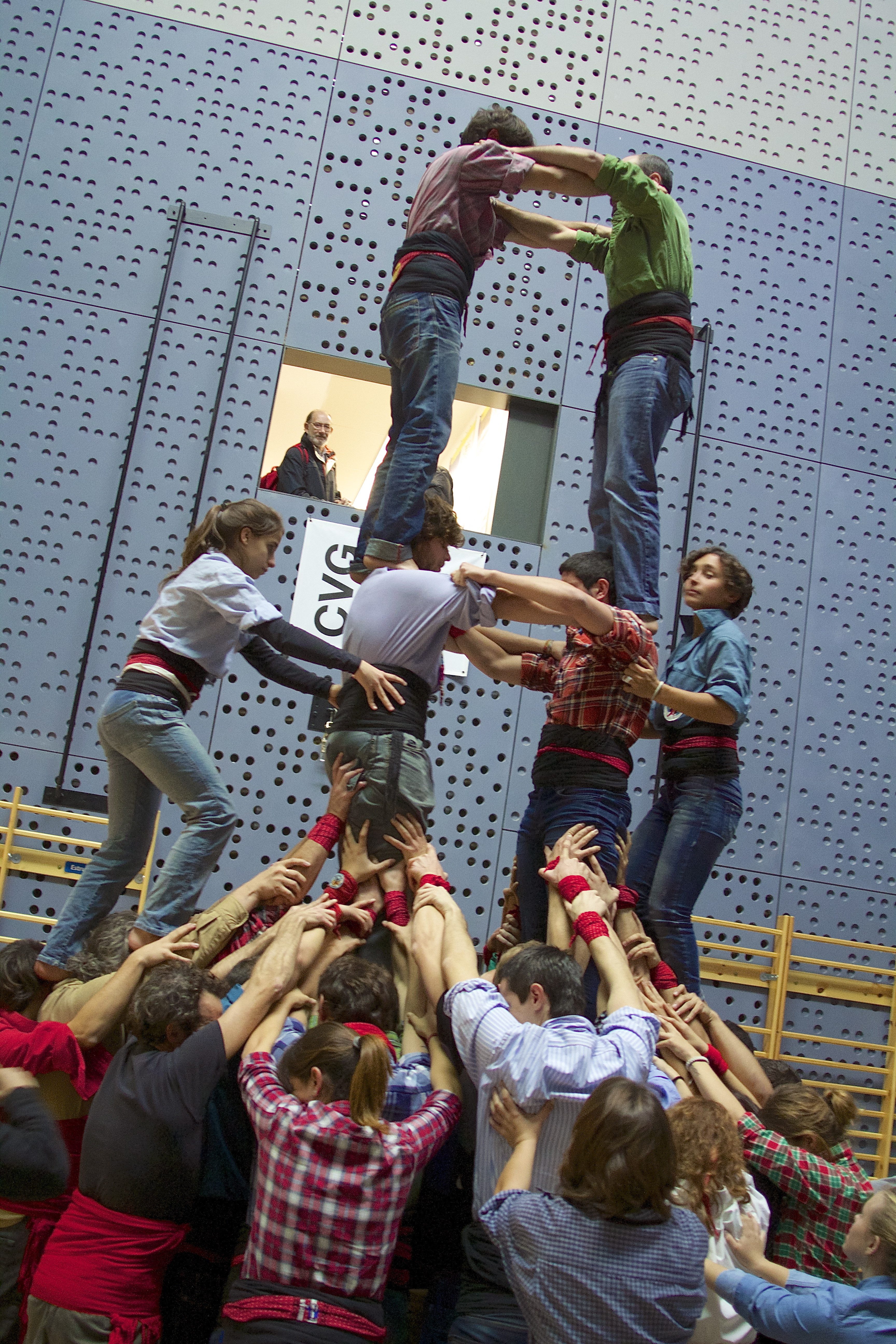
I had meant to meet up with Mariona, whom I met in my german class in Berlin, earlier in my short trip to Barcelona, but, as it happened, it was my last day in Barcelona and we hadn’t had a chance to hook up. She had invited me to check out her castelling practice and, due to a mix up of street names between Spanish and Catalan, I arrived just as they were finishing. Mariona is a part of Castellers de la Vila de Gràcia, a group that builds human castles in the Catalan tradition. The photo I took at their practice shows a castle 3 stories high but they go as high as 8 with the top two levels being children.

Afterwards we hung out in a piazza and talked about bike touring. Mariona had started a tour from Berlin heading West with the hopes of getting all the way to Ireland however she had to stop while in Germany because of really bad weather. I give her a lot of respect for her effort and courage in what she completed. While James and I stayed in BnBs, hotels, and hostels, Mariona went alone with a tent and relied on couchsurfing for accommodation, and while James and I had +$1000 touring bikes, Mariona had a 40€ bike she bought from Kottbusser Damm bridge (read stolen) that didn’t even have gears! OK, it had gears but the derailleur was stuck in 1 gear.

I also have to give her respect for adhering to the principles of the travel weasel (see Will Ferguson’s Hitching Rides with Buddha). The travel weasel always accepts offers of hospitality, no matter how generous they might be, and is happy to depend on the kindness of strangers for just about anything. Mariona was able to finagle free accommodation and meals from couchsurfing, including some packed lunches for the day ahead, and was able to trade smiles for bike repairs on a couple occassions. Well done!

IMG_0197

Barcelona not Black Sea

It was an easy decision. We were hanging out in our gracious host’s, Carmen, abode in Deva, Romania. We had caught the train here from Craiova, our second city in Romania, where we had woken up to find the city covered in snow, and we hadn’t been on our bikes since. We had spent 4 days with Carmen in Deva and also visited her family in nearby Alba Iulia during the national unity holiday, and now it was time to continue on but we weren’t sure where. Each day was getting colder and further into the negatives and we were still a long way from the Black Sea. At some point James said ‘I’ve got family in Barcelona’ and I said ‘done, let’s do it’.

We decided we would take the 9 hour train ride to the capital, București, spend a couple days there and then fly to Barcelona.

Now we’ve been in Barcelona for a few days visiting with James’ family, a nice couple with 4 cute kids, living the expat life just outside Barcelona in Esplugues. Both James and I had been in Barcelona around 2009 and we’d both been to Sagrada Família but as it is always under construction, with a completion date of 2026, we went to check out the progress in the last 4 years. Sagrada Família is truly amazing. It has such a unique style of architecture that combines a love of nature with exercises in ruled geometry. It is the most beautiful man made structure I’ve ever seen.

Rain, rain and gypsy women

20131126-180224.jpg

Today was the wettest day of our trip by a long friggin’ shot. I was counting my blessings that we’d only had two days of shit weather in over 3 weeks of November riding, but all things have to even out eventually, and today they overcompensated. Having crossed from Serbia into Romania yesterday and having spent the night in a small border town, today we cycled 110 km in rain, wind, sleet, and briefly snow from Drobeta-Turnu Severin to Craiova. This is day 1 of hopefully 3 on our way to the capital of Romania, Bucharest.

Having developed the habit of devouring a Snickers bar (or two) for extra energy, we stopped in a small village at an equally small convenience store. In the store were two customers, who as far as I could tell, were gypsy women. They both had their hair tied back in handkerchiefs and long patterned shirts covering up colourful stockings. The younger of the two asked us if we were German or Italian and, of course, I responded that we were Canadian. The younger spoke Italian and translated for the older woman who I guess was speaking Romanian. She described the older woman as nonna, or grandmother, although she pointed out not her grandmother.

The nonna, who may have been beautiful 50 years ago but today was all warts and hairs and warts with hairs, invited us over to her house for food and to rest. I declined saying we were going to Craiova and it was still a few more hours of cycling away. Maybe I should have declined more politely because she left the store abruptly.

The younger warned us about highway bandits, or at least I think that’s what she was saying. She kept making a chopping motion against my shoulder and then holding her hands together as if they were cuffed. She then went on to say she had 3 sons who were born in Italy – where the rest were born I don’t know, but she said one of them was named Leonardo after Leo from Titanic.

We left the store, gobbled down a Snickers each, and hopped back on our bikes. We waved goodbye to the two women as we passed them. Less than five minutes later, James, who was ahead of me, stopped on his bike. When I caught up, I found he had a flat tire. A long rusty nail had gone through his rear tube and put two holes in it. Now was this just a coincidence or a curse? Maybe I really should have declined her invitation more politely.

Route update: Black Sea or bust

Instead of ferrying to Italy and cycling up to Venice, we are going to keep going in the direction of the Danube towards the Black Sea. We are going to head into Romania and it should take us about a week to get to Bucharest, and, from there, a couple days to reach the Black Sea.

Following the Danube from source to sink!

Bad Blood

20131119-080333.jpg

When we arrived in Osijek, Croatia, we went to the central square of the city. There we ran into a group of cyclists in red outfits — about 20 guys and one girl. We circled around the square, checking each other out before we stopped to chat. They said they had cycled from Zagreb and were going to Vukovar which is another 30 km away. They asked us to take a photo with them and then gave us one of their custom flags so we could find them on Facebook.

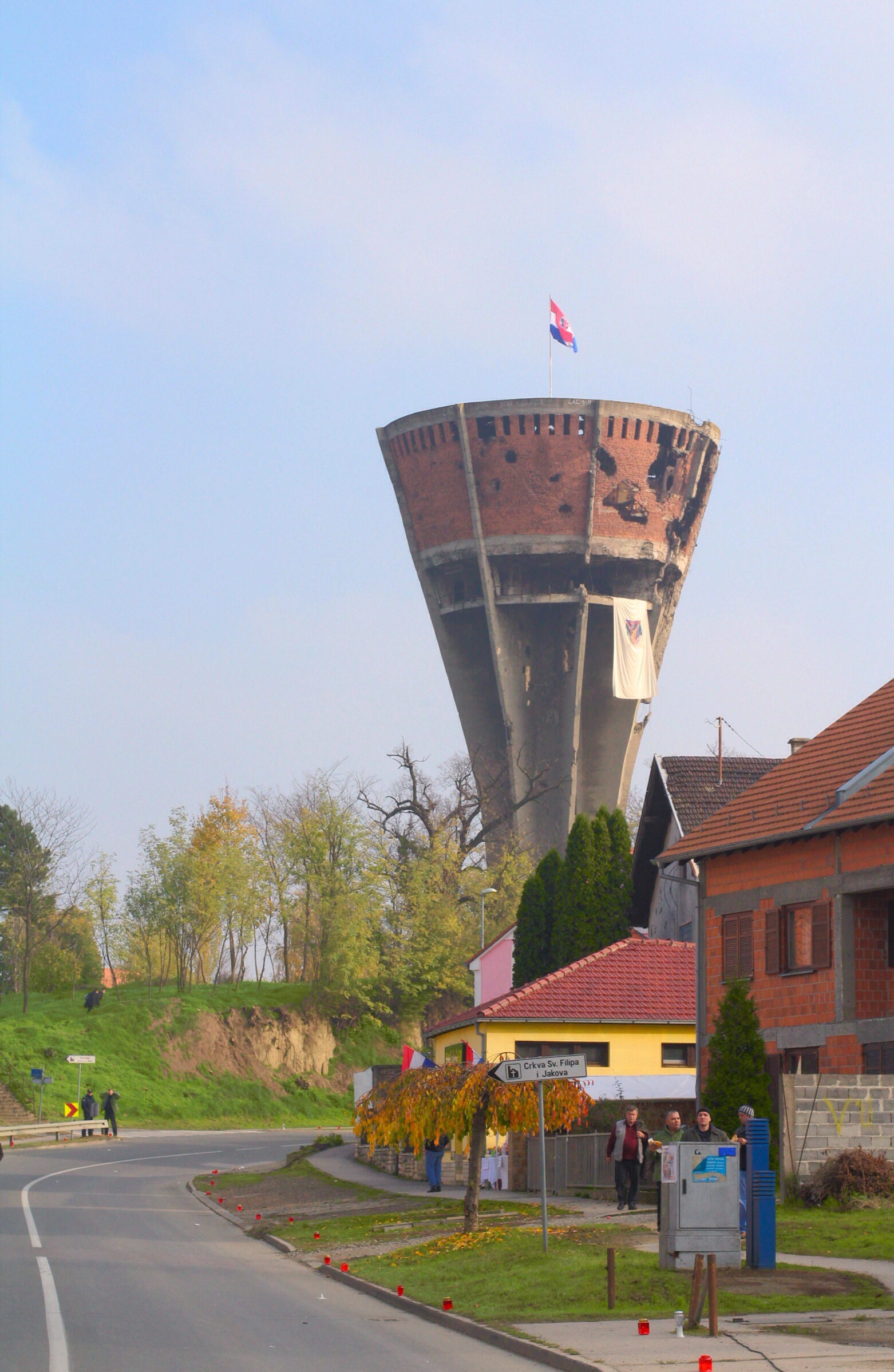
We soon found that all the hotels in the city were booked up and why they were going to Vukovar. Twenty three years ago to the day, the city of Vukovar fell after being under siege for three months, and every year tens of thousands of Croats from all over Croatia come to take part in a procession and had thusly filled all the hotels in Vukovar and neighbouring cities. We went to three hotels and each one said there won’t be anything in the city. Our best bet was to find a small village and stay in a private room. We did this.

I did a little bit of reading on the Battle of Vukovar, and it consisted of 2000 Croats defending their city against the much larger and much better equipped Yugoslav army. The city was a strategic position to hold for the Yugoslav army in the Croatian war for independence. Croatia wanted to leave Yugoslavia but Serbia wanted to stay unified and particularly keep the areas of Croatia with ethnic Serb majorities in Yugoslavia. After the city fell, there were massacres, torture and executions.

The next day we stubbornly made it to Belgrade. It was 120 km with strong headwinds; about 8 hours on our bikes including James and I losing each other for about an hour after getting separated on the highway.

Our adorably quirky gracious host at the hostel recommended us a traditional restaurant nearby. It wasn’t particularly noteworthy except that when our waiter asked us where we had been and we mentioned Vukovar, and while James took the diplomatic approach of saying the history was compicated, our waiter said it wasn’t complicated at all and that he was there during the war. He then went on to describe to us the motivations of the ethnic Serbs in Croatia and why they wanted to remain in Yugoslavia.

The waiter told us that during the time of the Second World War hundreds of thousands of Serbs were killed by the Croats and this was the reason they didn’t feel safe with the possibility of an independent Croatia and leaving Yugoslavia. I looked up what he said and it’s true. Croatia had their equivalent of the Nazi party during WWII and had a plan to ethnically cleanse Croatia of Serbs by expulsion, murder, and religious conversion. Hundreds of thousands of Serbs were killed — men, women, and children — often with a knife, or sent to concentration camps.

I don’t know even really know the difference between a Serb and a Croat except the religious difference of Eastern Orthodox versus Roman Catholic. I’m sure the history goes back a lot farther than the 1940s but this is what I was able to glean from a few hours reading Wikipedia.

Since the Croatian war of independence happened while I was quite young I don’t recall it but I do recall the war in Bosnia since it occurred during my later years in high school. For me, it was a problem that was occurring in a far away country so I didn’t relate to it so well. While I haven’t been to Bosnia yet, I’m glad I’ve been in Serbia and met some people here. If there is more conflict here, I will be able to relate to it better and have a more personal connection to it.

It feels strange to be in a city that my country, Canada, has bombed during my lifetime.